tg77 Probability in Casino Games
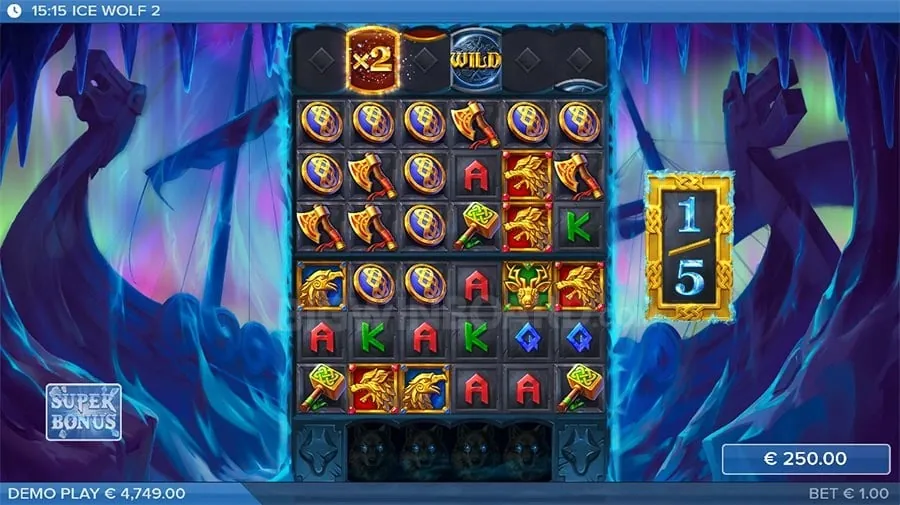
Understanding Probability in Casino Games with tg77
Welcome to tg77, your premier destination for online casino entertainment tailored for the Philippines market. In the thrilling world of casino games, understanding probability isn't just an academic exercise; it's a fundamental aspect that can significantly influence your gaming strategy and overall experience. From the spinning reels of slots to the strategic decisions in blackjack, every game is built upon a foundation of mathematical probabilities. This article delves into the core concepts of probability in casino games, contrasting different game types and offering insights to help you make more informed choices. Whether you're a seasoned player or new to the scene, grasping these principles is crucial for navigating the exciting landscape of online casinos. We'll explore how probability dictates outcomes, how house edge works, and provide practical tips to enhance your gameplay. Join us as we demystify the odds and empower you to play smarter at tg77.
Table of Contents
- What is Probability in Casino Games?
- House Edge vs. Return to Player (RTP)
- Probability in Different Casino Games: A Comparison
- Leveraging Probability for Smarter Gameplay
- Common Misconceptions About Casino Probability
- Choosing Games Based on Probability and Your Goals
- Frequently Asked Questions
What is Probability in Casino Games?
Probability, in the context of casino games, is the mathematical likelihood of a particular event occurring. It's expressed as a number between 0 and 1 (or 0% and 100%), where 0 means the event is impossible, and 1 means it's certain. For instance, the probability of rolling a specific number on a fair six-sided die is 1/6. In casino games, probability helps us understand the chances of winning, hitting a specific combination, or losing a bet. It's the bedrock upon which all casino games are designed, determining the long-term profitability for the casino and the potential payouts for players. Understanding this concept is the first step towards demystifying the allure of games like slots, roulette, and blackjack.
House Edge vs. Return to Player (RTP)
Two critical terms directly related to probability are House Edge and Return to Player (RTP). These concepts are often contrasted but essentially describe the same thing from different perspectives.
-
House Edge: This is the casino's built-in advantage, expressed as a percentage of the player's initial bet. It represents the average percentage of each bet that the casino expects to keep in the long run. For example, if a game has a 2% house edge, it means that for every $100 wagered, the casino expects to keep $2 over an extended period. The house edge ensures the casino's profitability and is a direct consequence of game probabilities being slightly skewed in favor of the house.
-
Return to Player (RTP): RTP is the inverse of the house edge, representing the percentage of all wagered money that a slot machine or casino game is programmed to pay back to players over time. If a game has an RTP of 96%, it means that, on average, for every $100 wagered, the game will return $96 to players. The remaining 4% is the house edge. Higher RTP percentages are generally more favorable for players, as they indicate a lower house edge and better long-term payout potential. At tg77, we offer a wide array of games with transparent RTPs, allowing you to choose games that align with your risk tolerance and payout expectations.
Understanding the difference between house edge and RTP is crucial for making informed decisions about which games to play and how to manage your bankroll effectively.
Probability in Different Casino Games: A Comparison
The role of probability varies significantly across different casino games. Let's compare a few popular types:
-
Slots: Slot machines are perhaps the most straightforward in terms of probability from a player's perspective. Each spin is an independent event, and the outcome is determined by a Random Number Generator (RNG). The probability of hitting a specific combination is pre-programmed and contributes to the game's overall RTP. Players cannot influence the outcome of a single spin, but they can choose games with higher RTPs for better long-term odds. For example, a slot with 96% RTP offers better theoretical returns than one with 92% RTP.
-
Roulette: Roulette offers various betting options, each with different probabilities. In European Roulette, there are 37 pockets (1-36 plus a single zero). The probability of hitting a specific number is 1/37. Betting on red/black or odd/even has a probability of 18/37 (just under 50%) due to the zero pocket. The house edge in European Roulette is approximately 2.7%, while American Roulette (with an additional double zero) has a higher house edge of around 5.26% due to 38 pockets. Understanding these probabilities helps players choose bets with better odds, though the house edge remains constant across all bets in roulette.
-
Blackjack: Blackjack is unique because player decisions can influence the probability of winning. Using basic strategy (a mathematically proven way to play every hand) can significantly reduce the house edge to as low as 0.5% to 1%. This is because players can choose to hit, stand, double down, or split, altering the odds with each decision. Without basic strategy, the house edge can climb considerably. This makes blackjack a game where skill and understanding probabilities play a much larger role than in pure chance games like slots.
-
Poker (e.g., Texas Hold'em): While not a traditional casino game against the house, casino poker variants (like Caribbean Stud or Three Card Poker) still involve probabilities. In player-versus-player poker, probability is crucial for calculating pot odds, implied odds, and the likelihood of drawing specific cards. Skilled poker players constantly make decisions based on these probabilities, making it a game of both skill and chance. The house typically takes a rake (a percentage of the pot) or a fee to host the game.
As you can see, the application and impact of probability differ greatly. Games like blackjack and poker reward strategic play informed by probabilities, whereas slots and roulette are more about understanding the inherent odds and managing your expectations. Explore these diverse options at tg77.
Leveraging Probability for Smarter Gameplay
Understanding probability isn't just about knowing the odds; it's about using that knowledge to inform your gameplay. Here are some ways to leverage probability:
-
Choosing Games Wisely: Opt for games with a lower house edge or higher RTP if your goal is to maximize your chances of winning over the long term. Blackjack, with proper strategy, often offers some of the best odds. European Roulette is preferable to American Roulette due to its lower house edge.
-
Employing Basic Strategy: In games like blackjack, learning and consistently applying basic strategy is paramount. This strategy is built on mathematical probabilities and tells you the optimal move for every possible hand combination, significantly reducing the house's advantage.
-
Bankroll Management: Probability teaches us that losses are an inevitable part of gambling. Effective bankroll management, setting limits on how much you're willing to spend, and sticking to those limits, is crucial. This helps you withstand losing streaks and enjoy your gaming experience responsibly.
-
Understanding Variance: Even with high RTP games, short-term results can be unpredictable due to variance. Probability helps us understand that while a game might have a 96% RTP, you won't necessarily get $96 back for every $100 you bet in a single session. This awareness helps manage expectations and avoid chasing losses.
By integrating these insights into your gaming approach at tg77, you can enhance your enjoyment and potentially improve your outcomes.
Common Misconceptions About Casino Probability
Many players fall prey to common misconceptions about probability, which can lead to poor decision-making:
-
The Gambler's Fallacy: